The heart of Gran Canaria (balanced version)
Itinerary Scores
Description
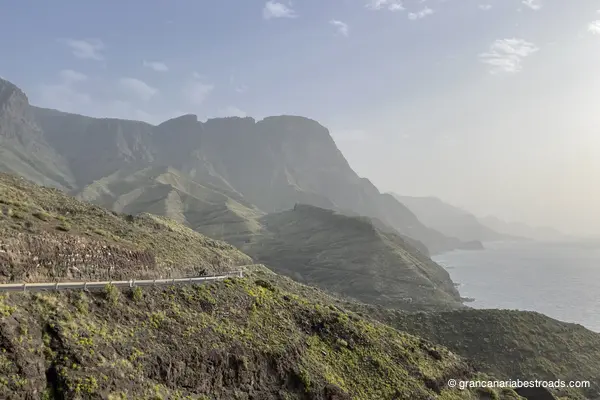
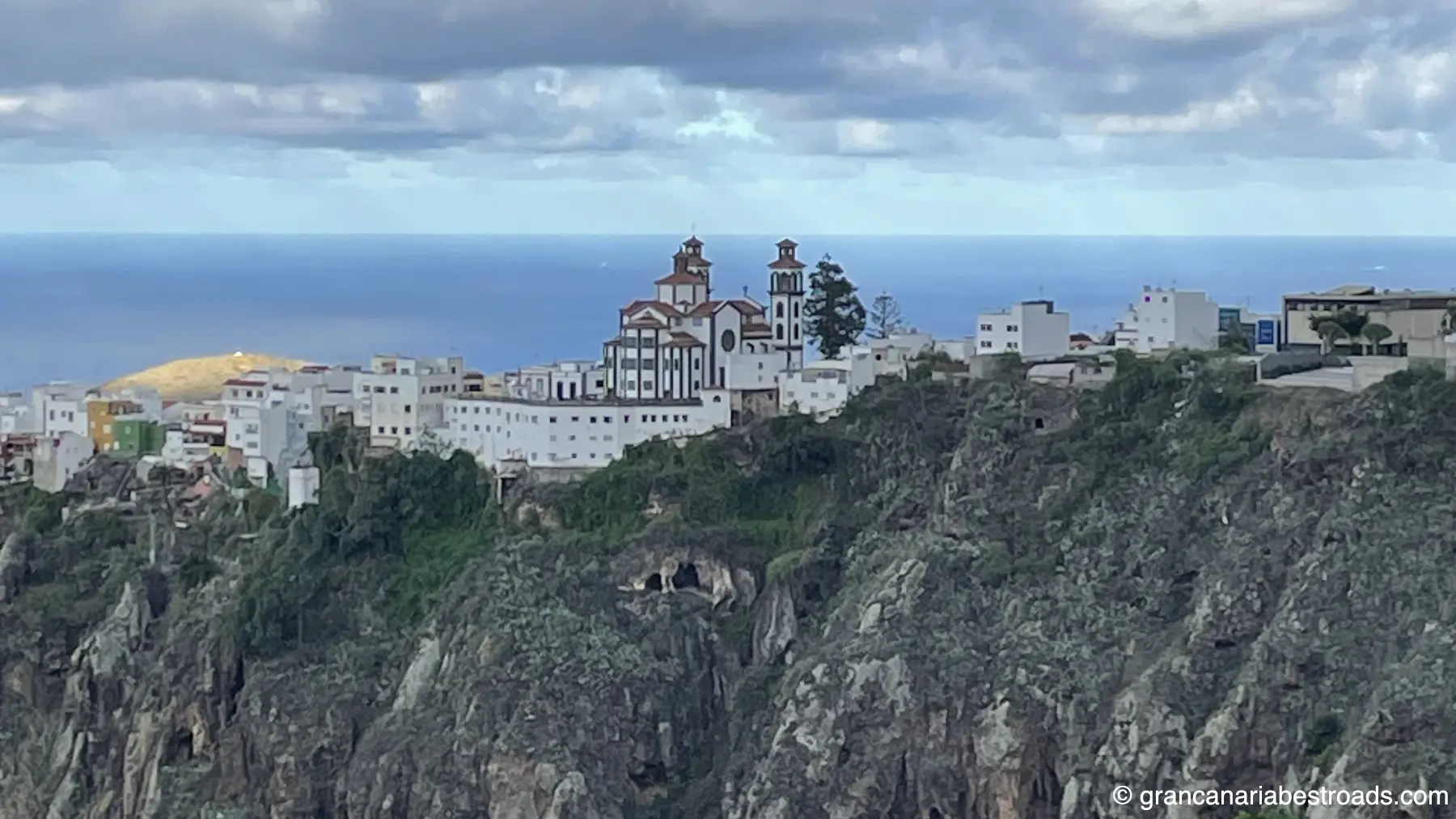
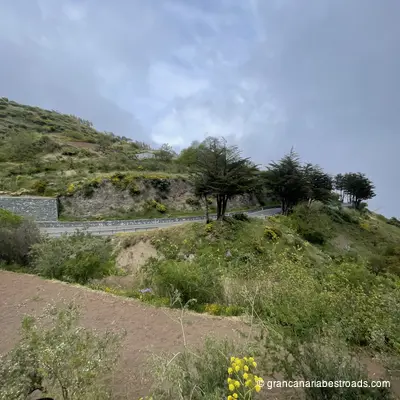
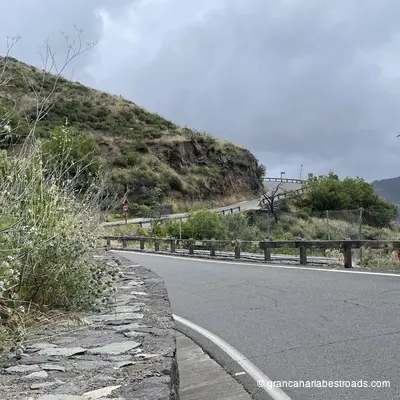
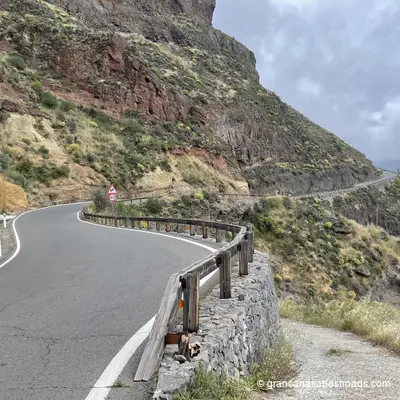
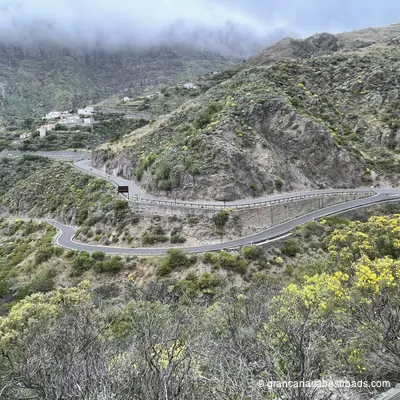
The itinerary will take you to see the famous peaks and mountains of Gran Canaria, including the renowned Pico de las Nieves and Roque Nublo. You'll be guided along the best roads and mountain views of Gran Canaria, where continuous glimpses down to the sea alternate with constantly changing vegetation. You'll also visit some charming towns where you can still find that original Canarian touch and enjoy a worthy lunch. And get ready for a sunset that will leave you breathless. This itinerary offers the right mix of riding and town exploration. Departure and arrival in Las Palmas.
What is included
- A PDF with a detailed map, a list of stops, timelines, a complete description of the route, points of interest, and recommended restaurants.
- A GPX track with all the stops, which can be used with your favorite app.
Included Points of Interest
Artenara
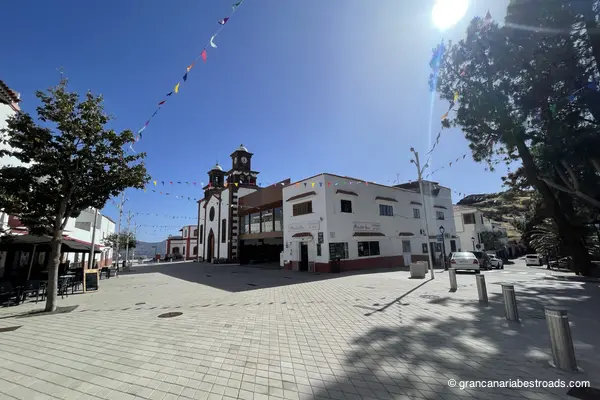
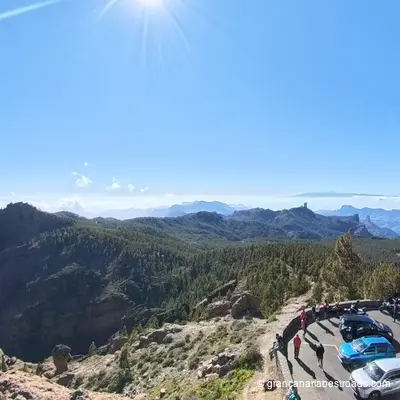
Artenara repays the time spent getting there with one of the most beautiful views in the entire Canary archipelago. From the rim of the **caldera** at 1,270 metres, Roque Nublo rises in the distance, and on clear days you can see the cone of the Teide and the island of Tenerife on the horizon. The village itself is quiet and authentic — cave houses carved into the volcanic tuff, narrow alleys, and a handful of local restaurants serving Canarian cuisine and a goat cheese that is highly renowned and the winner of several contests. Don't miss the Chapel of the Virgen de la Cuevita, a small church set into a natural cave at the edge of the caldera, with the ravine opening up beneath your feet. The nearby Risco Caído archaeological complex is a **UNESCO World Heritage** site. Also very distinctive is the restaurant **Cueva Del Molino**, where you dine inside the rock: an experience that alone is worth the visit. Every road leading up to Artenara is a true driving pleasure: long sequences of hairpin bends among pines and eucalyptus with little traffic and open panoramas. The **GC-220** from Agaete, the **GC-210** from Tejeda and the **GC-21** straight from Las Palmas are all exceptional. Temperatures at altitude are noticeably cooler than on the coast — a welcome change on hot days.
Roque Nublo
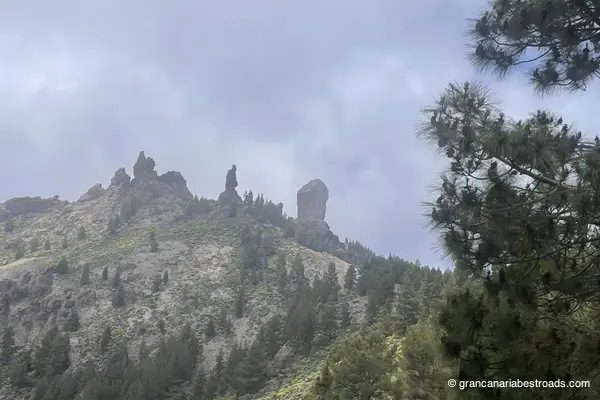
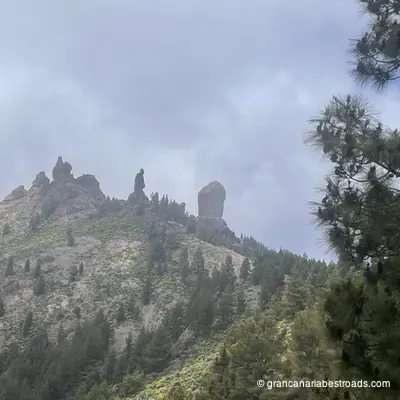
**Roque Nublo** is the most iconic landmark of **Gran Canaria**: an 80-metre-tall volcanic monolith standing at 1,813 metres, with its smaller companion El **Fraile** on a wind-swept plateau. The view from the top of the approach trail embraces the entire **Tejeda** caldera, all the way to the coast, and reaches the **Teide **on a clear day. The approach trail from the road takes about 45 minutes on foot and is well maintained, gaining elevation among volcanic boulders and scattered pines. The plateau around the base of the monolith is almost barren, with a sparse forest all around. There are no facilities at the trailhead. The roads climbing from Tejeda to the start of the Roque Nublo trail are among the finest in the Canary Islands: narrow, endlessly winding, with sudden open panoramas and little traffic. The hike rewards the ride, and the ride rewards the hike!!
Pico de las Nieves
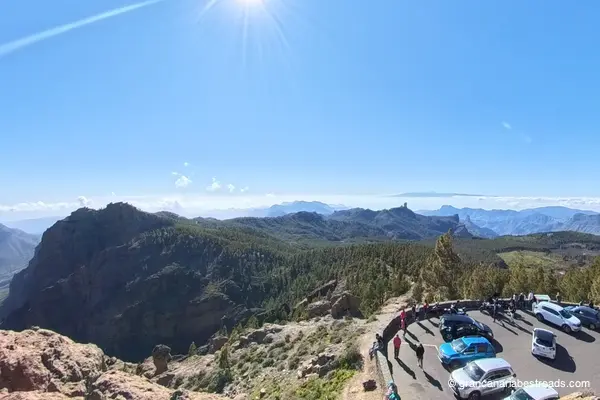
At 1,949 meters, **Pico de las Nieves** is the highest point of Gran Canaria and offers the most complete panorama of the island. On a clear day the entire island unfolds at your feet: green northern valleys, deep ochre erosion gullies to the south, the desert coast of **Maspalomas** and the interior of the caldera, while **Tenerife**, **La Palma** and **El Hierro** float on the horizon. The summit area is surrounded by fragrant Canary pine forests. A military telecommunications installation sits right on the peak, but the surrounding viewpoints are fully accessible. The road climbing up passes through the **Pilancones** pine forest and the cumbre plateau — the wide, elevated curves among pines and open heath are among the finest drives on the island. The air is noticeably cooler and cleaner at altitude, which makes this an excellent midday stop when it's hot. Park and enjoy the view. The summit is the geographic heart of the island, and from here roads set off in every direction: toward **Tejeda**, **Roque Nublo** or down to **Maspalomas**. It's truly easy, and almost obligatory, to slot **Pico de las Nieves** in as the final stage of your journey, to enjoy an unforgettable sunset!
Teror
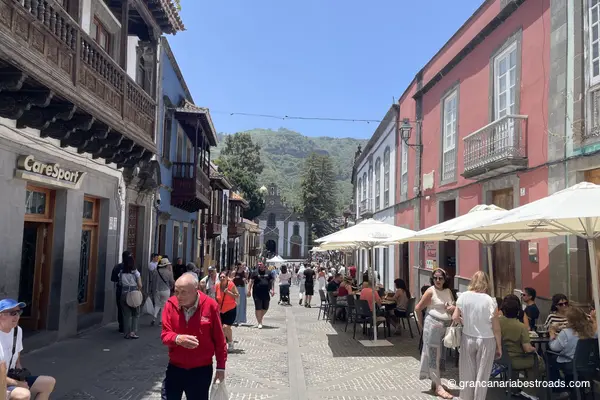
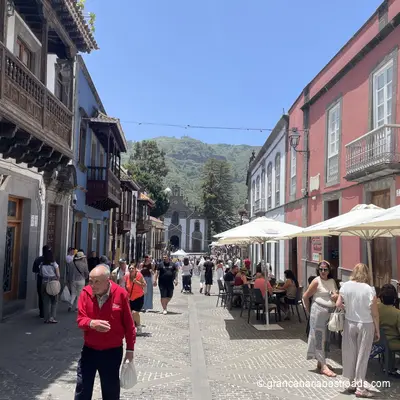
The historic centre of **Teror** is one of the finest examples of traditional Canarian architecture on any of the islands. The **Calle Real de la Plaza** is lined with whitewashed facades and richly carved wooden balconies, each one different from the next, which together form one of the most photographed urban views on **Gran Canaria**. The **Basílica de Nuestra Señora del Pino**, the most important church on **Gran Canaria**, dominates the square with its warm yellow cantería facade and its Portuguese Gothic-style bell tower. Inside the basilica, important sculptural works by José Luján Pérez and the treasure room with centuries of votive offerings are absolutely outstanding. On Sunday mornings a market fills the plaza with local cheeses, mojo sauces and traditional products — among the best on the island. The mineral water from **Teror** is sold everywhere on the island; it is genuinely good. The town feels completely separate from the capital despite the short distance. You reach it through hills cloaked in pine forest along the **GC-21** or the **GC-43**. You can easily park near the town centre. Allow at least an hour: the basilica, the historic streets and a coffee on the square make this the most rewarding cultural stop among the towns of northern Gran Canaria.
Tejeda
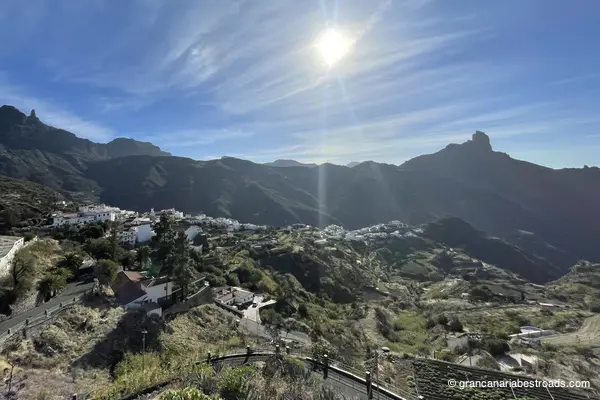
**Tejeda** is the beating heart of the most beautiful roads on **Gran Canaria**. The village sits at around 1,050 metres in the ancient caldera, surrounded by almond orchards that burst into pink and white blossom every February. The **Fiesta del Almendro en Flor** transforms the valley for the whole weekend. The village square is small, authentic and well equipped: at any time of year the local craft shops sell marzipan, honey and almond products, and there are cafés for a stop with a view over the caldera. **Roque Nublo** and **Roque Bentayga** are both visible from the surrounding roads. The **Parador** at **Cruz de Tejeda**, a few kilometres above the village, offers a bar and eatery with one of the finest panoramas on the island. The local almond sweets are among the best on Gran Canaria: well worth buying. From whichever direction you come, **Tejeda** is probably the high point of the route: from **Maspalomas** to the south, from **Agaete** to the north-west or from **Las Palmas** to the north-east, the roads serve up spectacular climbing sequences of consistent quality. The village is the natural midpoint of any serious loop through the interior, so plan your route to pass through it rather than around it.
Mirador astronómico de Pinos
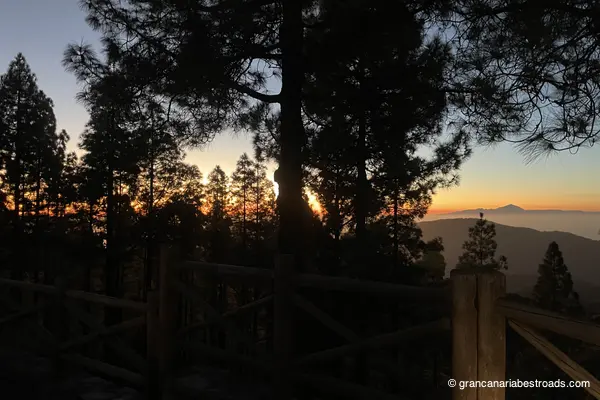
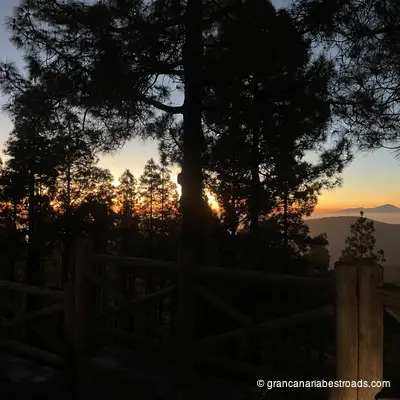
Built specifically for astronomical observation at around 1,400 metres of elevation, the **Mirador Astronómico de Pinos** is equipped with orientation panels and a sheltered viewing platform that minimises light pollution. On clear nights the Milky Way is extraordinary — the altitude, the clean Atlantic air, and the distance from the coastal resort lights make this one of the best stargazing spots on **Gran Canaria**. By day, the views over the pine canopy down to the ocean are exceptional, with **Tenerife** and **Teide** visible on the horizon. The surrounding **Tamadaba** pine forest is fragrant and atmospheric, and the walk around the site is rewarding even without a telescope. Plan this as a late-afternoon stop: linger until sunset, when the temperature drops, and stay for the stars before descending towards the coast. The road through the **Tamadaba** forest has tight bends, fresh air, and sudden openings with coastal panoramas. One of the few roads with excellent driving pleasure in both directions: find a way to include this stop on your travels.
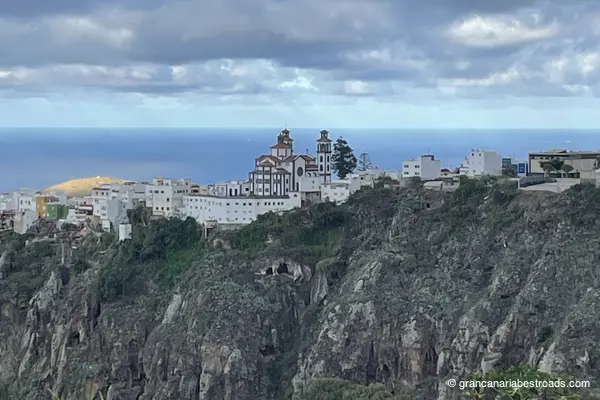
Moya
A quiet town in the north with two things worth your time: the laurisilva of Los Tilos de Moya in the barranco below, and a genuinely local character that makes it an excellent coffee stop before heading into the central mountains. It is the birthplace of the Canarian poet Tomás Morales, whose family home is now a museum, and that gives the town a cultural dimension all its own. The church of the Virgen de la Candelaria and the view from the square over the deep green barrancos are simple pleasures. The access road that runs through Los Tilos, the **GC-700**, winds through some of the most lush and shady terrain on the island, a total contrast to the arid south. The forest is the main attraction here: 90 hectares of ancient laurisilva, a living relic, best explored on foot along the barranco trails. Moya is a rewarding detour from the coastal corridor of the **GC-2**. The village is quiet, genuine and unhurried. The road it sits on, the **GC-75**, is arguably among the most beautiful on the island and certainly among my favourites.
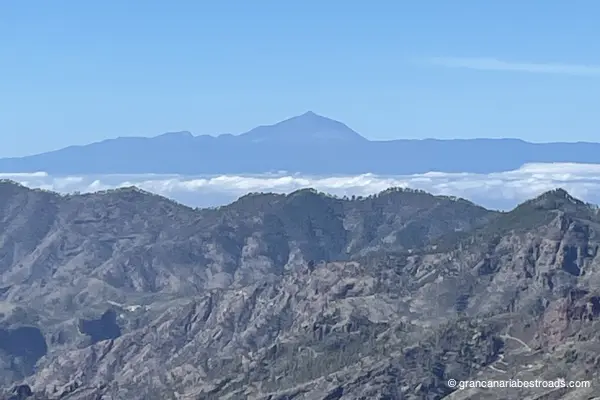
Cruz de Tejeda
The geographic and, for some, emotional heart of **Gran Canaria**. At around 1,450 metres above sea level and perched on the rim of a caldera, **Cruz de Tejeda** sits at the crossroads of several of the island's mountain roads, all of them spectacular, with **Roque Nublo** rising up before you and the panorama opening out in every direction. The stone cross at its centre is surrounded by craft stalls selling almond-based products from the orchards below: every February the almonds blossom white and pink in one of the island's most celebrated natural events. The *Parador* at the mouth of the pass is an elegant traditional stone building where you can stop for a coffee or a meal with views over the caldera. Along the road you'll often find stalls selling almond sweets, honey and local products among the finest on the island. Cloud formations frequently wrap around the rim of the caldera, creating a dramatic, ever-changing light that is well worth waiting for. **Cruz de Tejeda** is the natural climax of any ride through the interior. The **GC-150** arrives both from the North, through a pine forest, and from the South, from **Pico de las Nieves**; the **GC-60** comes in from the West and climbs all the way from **Maspalomas**, passing through **Tejeda** with tight hairpins and dizzying drops, and the **GC-15** is the connecting point for all the roads climbing up from the East.
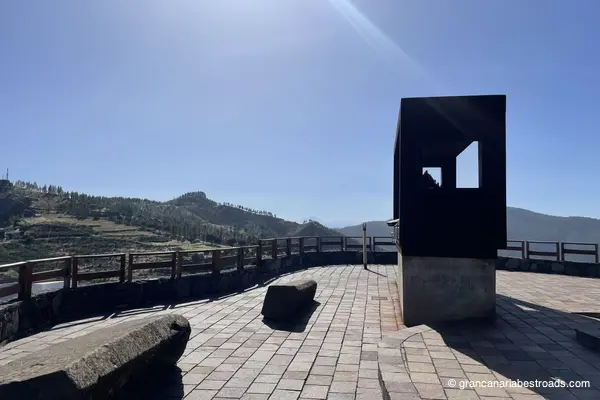
Mirador De La Atalaya de Artenara
The finest view from Artenara — and Artenara has several remarkable ones. From the edge of the village at 1,270 metres, the great caldera opens up before you: Roque Nublo rises in the foreground, Roque Bentayga off to one side, and on clear days the snow-capped cone of Teide on Tenerife appears on the horizon. Every road up to Artenara is a genuine riding pleasure: long sequences of hairpins through pine and eucalyptus with little traffic and wide-open views. Plan your descent along a different route, towards the Tamadaba forest or Agaete, rather than doubling back the way you came: you'll never be disappointed!
Gallery
Journeys that include this itinerary
Get more value with a complete journey package