
Grand sea itinerary
Itinerary Scores
Description
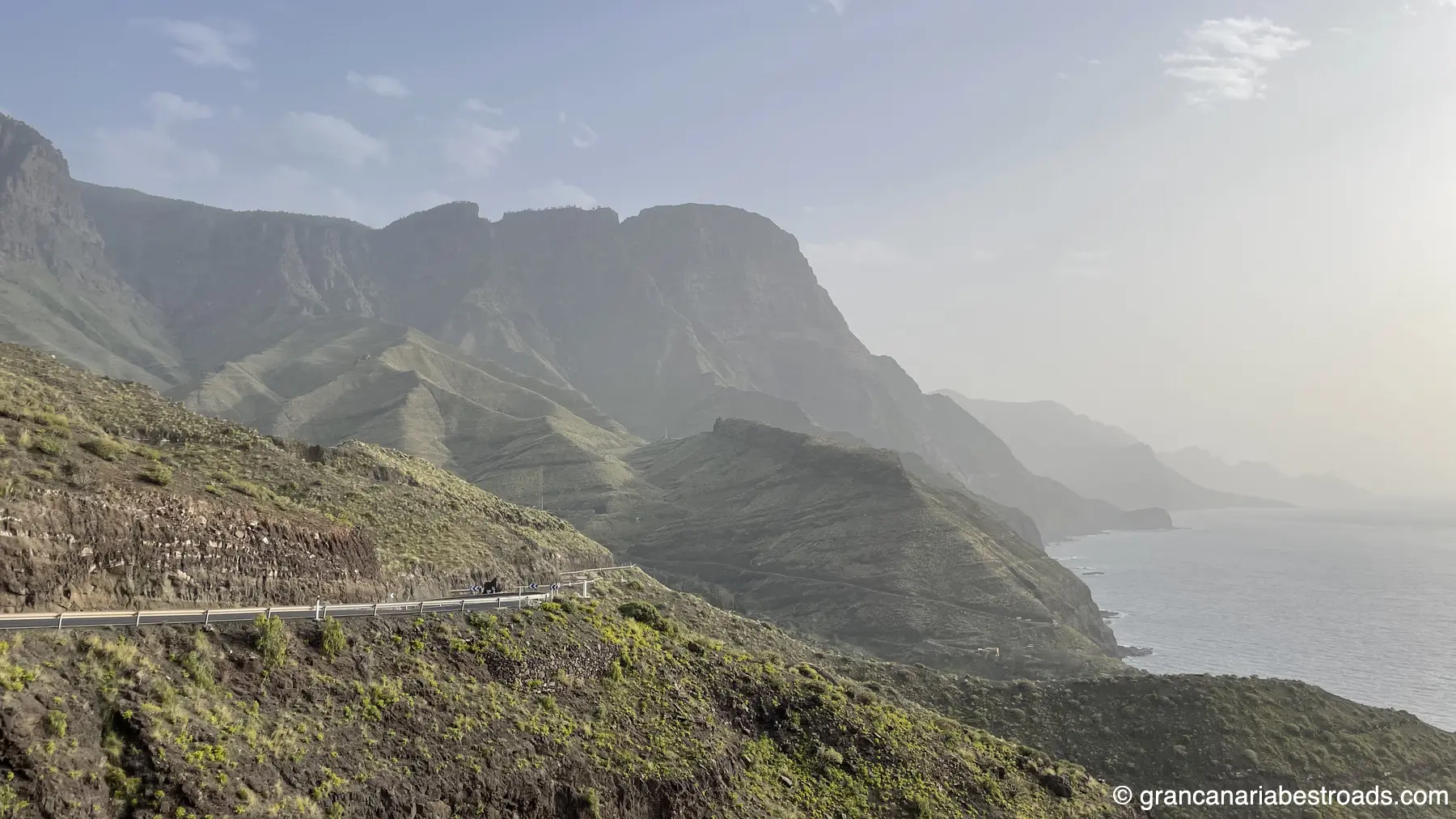
The coastal itinerary of Gran Canaria! The entire coast, desert dunes, towns, a breathtaking Mirador you'll remember forever, and a legendary road perched over the ocean for kilometres. Worried about too much motorway? Don't be: the right detours have been added to include some of the most beautiful and fun roads in Gran Canaria and unforgettable towns.
The itinerary is designed in 4 parts, each about an hour of riding, with a fuel and lunch stop in the middle and refreshment breaks at the other 2 stops. Departure and arrival in Las Palmas.
What is included
- A PDF with a detailed map, a list of stops, timelines, a complete description of the route, points of interest, and recommended restaurants.
- A GPX track with all the stops, which can be used with your favorite app.
Included Points of Interest
Mirador del Balcón
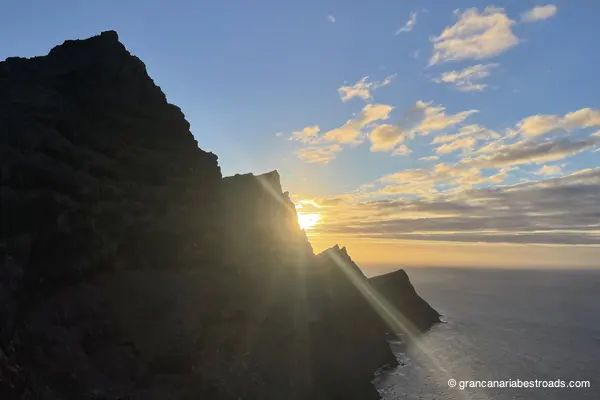
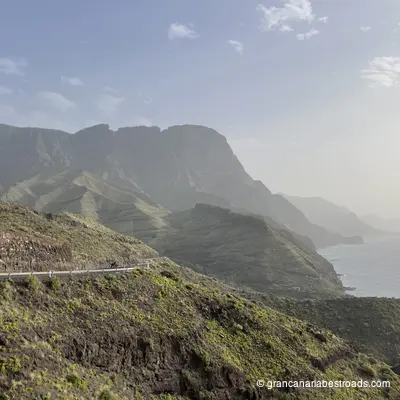
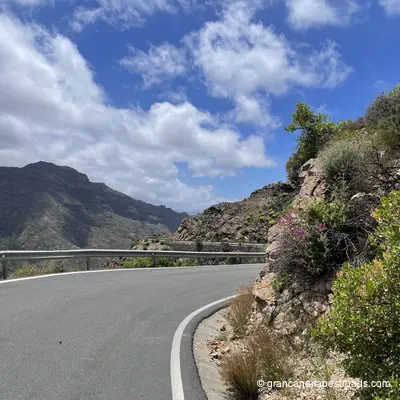
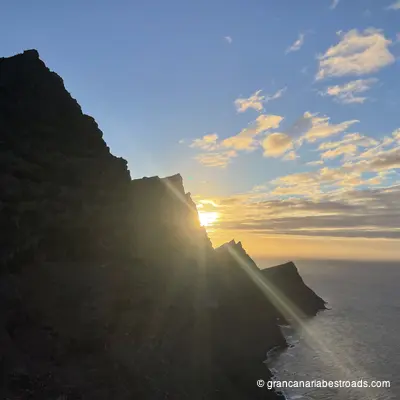
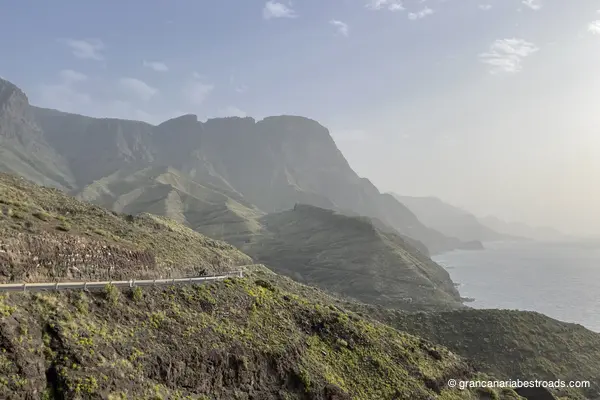
The glass-floored walkway of the **Mirador del Balcón** juts out beyond the edge of the cliff, letting you look straight down several hundred metres to the Atlantic. The recent renovation added information panels and improved access, while maintaining the view it has always offered: one of the most vertiginous and extraordinary on any island road in Europe. Several birds nest in the rock face and can often be watched as they hunt. The **GC-200** road that brings you here is as much of an objective as the viewpoint itself: this road clings to the edge of the cliff for kilometre after kilometre with nothing but ocean on one side and rock on the other. Traffic is light, the road surface quality is good, and the rhythm of the curves is relentless in the best sense of the word. The stop is quick and accessible; there is no need to walk to reach it.
Mirador de Las Dunas
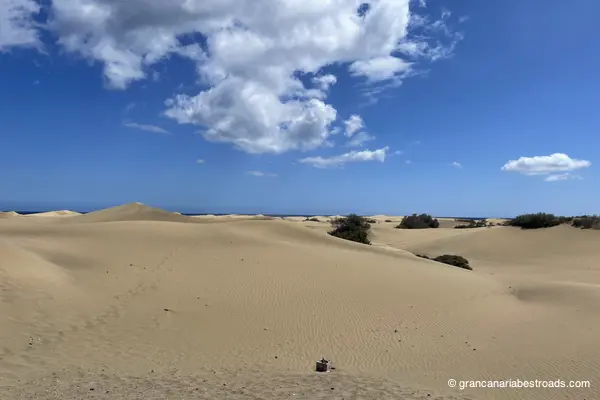
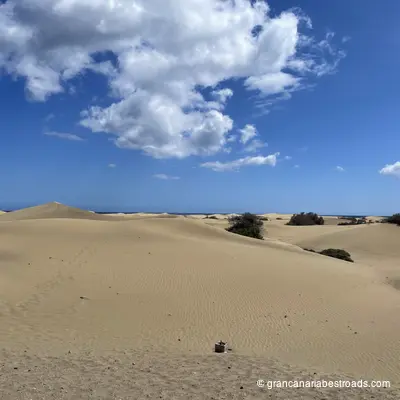
It is probably the most visited tourist attraction on **Gran Canaria**: an elevated viewpoint over the dunes of **Maspalomas**, around 400 hectares of shifting golden sand at the southernmost tip of the island, one of the few true desert ecosystems in Europe. From the **Mirador de Las Dunas** the whole expanse is visible: rhythmic crests and hollows, the morning light tinting the sand gold, the blue Atlantic marking the southern horizon, and the Maspalomas lighthouse rounding out the scene. The reserve also includes a freshwater lagoon, a palm grove, and a band of coastal scrub. The dunes themselves can be entered on foot from several access points — venturing in reveals a landscape of surprising silence and vastness. The nearby lighthouse area has cafes and facilities. The lagoon is a haven for migratory birds, particularly in autumn and spring. It is a must-stop for any itinerary in the south of the island.
Puerto de las Nieves
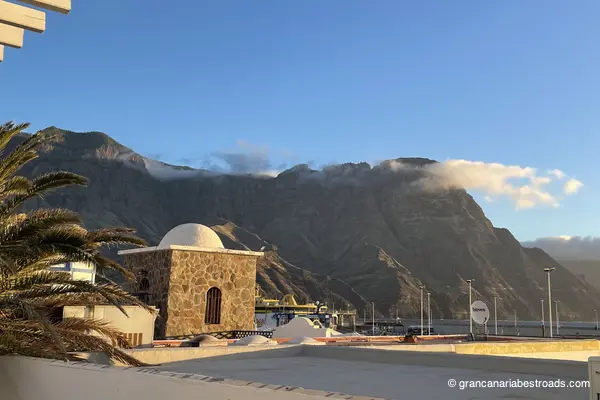
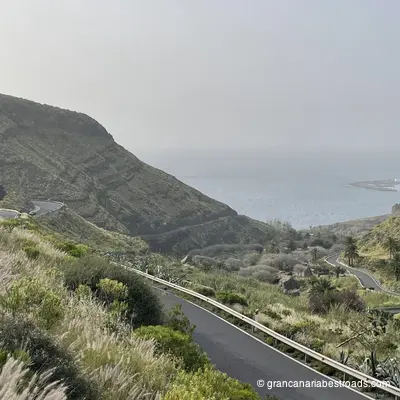
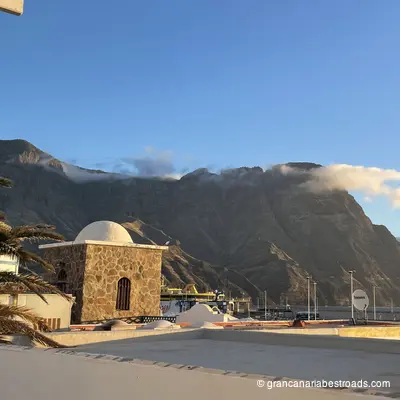
A compact working harbour, sheltered beneath imposing dark cliffs, with fish restaurants lining the quay, fishing boats still landing their catch, and a ferry terminal connecting **Gran Canaria** to **Tenerife** in just over an hour. The whitewashed village is genuinely lived-in — no hotel towers, no tourist infrastructure. What remains of the **Dedo de Dios**, the volcanic rock pinnacle largely destroyed by Hurricane Delta in 2005, is still visible from the harbour wall. The harbour of **Puerto de las Nieves** — a short descent from the town — offers a row of fish restaurants with open-air terraces. A typical dish is grilled parrotfish, and it's definitely worth trying here. A traditional Canarian windmill stands as a reminder of the area's agricultural past. A few minutes are enough to see it all, but for the atmosphere — the cliffs at your back, the Atlantic before you, the boats in between — it's worth lingering and stopping for lunch or dinner. Easy to reach with a short descent from the **GC-2** from Agaete. The **GC-200** sets off directly from the town, a spectacular road that leads to the notorious **Mirador del Balcón**.
Mirador de La Orilla
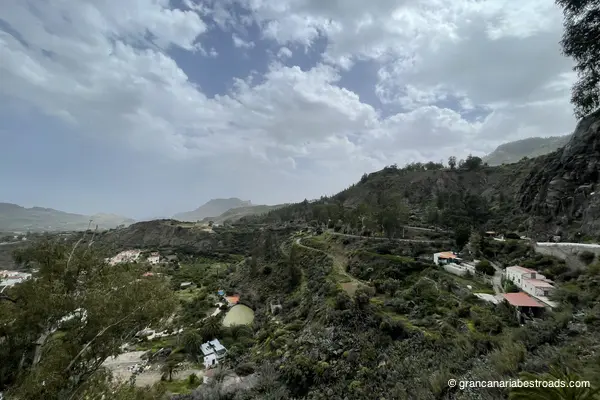
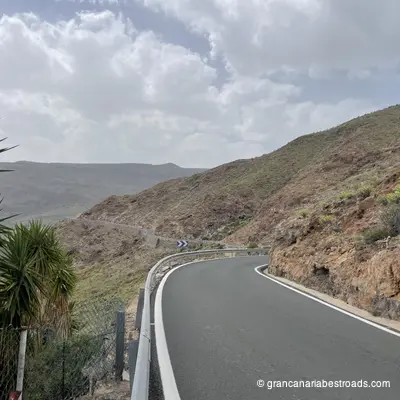
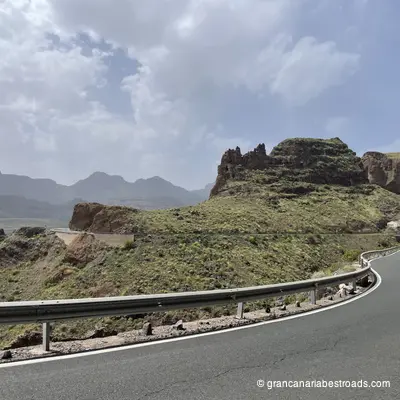
The Mirador de La Orilla gives you the full scale of the Barranco de Tirajana: a broad, flat valley floor flanked by walls that rise several hundred metres, with the characteristic flat-topped formations of the eroded caldera of **Gran Canaria** visible in every direction. The villages of **Santa Lucía** and **Agüimes** can be seen in the middle distance, surrounded by palm groves and terraced farmland. The contrast between the bare rock walls and the cultivated valley floor is sharp and striking. The roads that cross Tirajana and lead up here, the **GC-65** and **GC-60**, are among the most technically engaging on the island: sinuous descents, tight hairpins alternating with long stretches that let you read the road ahead. The mirador sits at the side of the road, with a small parking area, just a stone's throw from the town centre. It's an excellent candidate for a lunch or refreshment break during your itineraries.
Los Azulejos de Veneguera
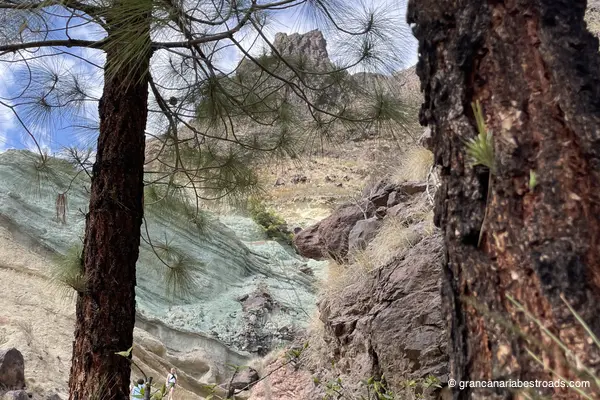
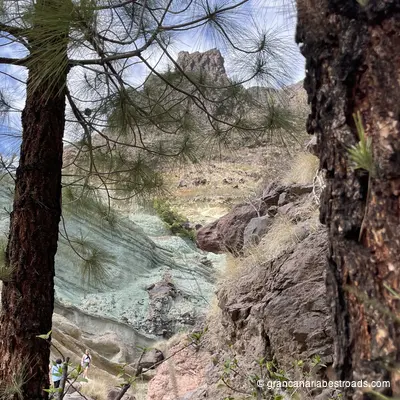
The extraordinary palette of colours is the reason it is famous: greens, blues, ochres, purples and reds painted onto a sheer rock wall deep within the **Barranco de Veneguera** — the result of mineral deposits in the ancient volcanic rock. There is no formal tourist infrastructure, just a pull-in area and the silence of the ravine, which is exactly its charm. The approach road through the valley is scenic and peaceful, with progressive views as the coast drops away behind you. The rock walls are best seen in morning or afternoon light, when the colours are most vivid against the surrounding dark basalt. No crowds, no entrance tickets, no facilities: if you want to visit **Los Azulejos** on foot, remember to bring your own water. The road through the **Veneguera** valley is narrow but well surfaced, with tight but very enjoyable hairpins for those seeking the pleasure of the ride. It lies within the **Parque Rural del Nublo**, so the surrounding terrain is wild and largely untouched. Combine it with a loop starting from **Puerto de Mogán** and continuing along the coast to **La Aldea** for a complete tour of the south-western part of **Gran Canaria**.
Santa Lucía
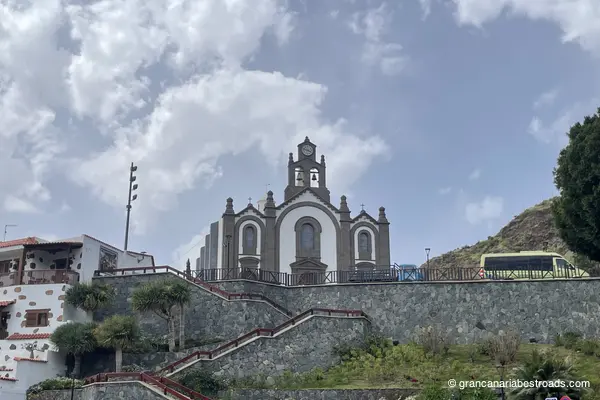
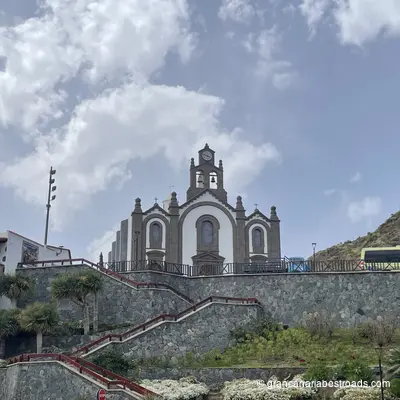
The traditional hillside village of **Santa Lucía de Tirajana** sits in the mid-altitude farming belt, with a quiet, rural character far removed from the coastal sprawl that spreads out lower down. The church of **Santa Lucía** presides over the village square. The surrounding landscape of deep ravines and terraced slopes is home to the archaeological site of **Las Fortalezas**, where ancient cave settlements of the aboriginal Canarians have been uncovered. **Roque Aguayro** lies nearby. The village is a natural stop on the southern mountain circuit: calm, authentic, genuinely different from the coast. A coffee on the square and the views over the **Barranco de Tirajana** are the main reward. Simple and honest. The road climbing from the coastal plain through the **Barranco de Tirajana** up to Santa Lucía, the **GC-65**, is extraordinary: canyon walls, flowering terraces and deserted hairpins. The shift from coastal chaos to mountain silence happens within minutes of leaving the lowlands behind. Best combined with the **Mirador de La Orilla**, just above.
Agaete
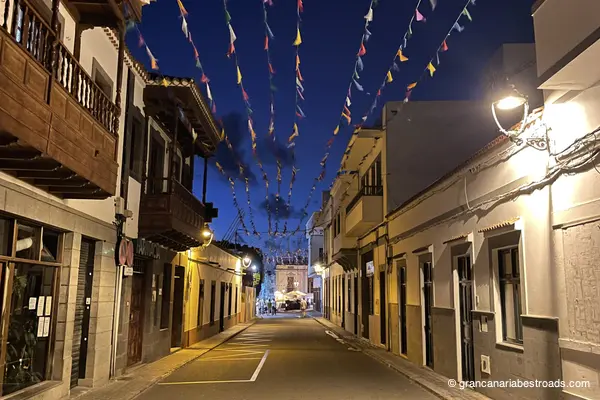
Agaete's strengths are its harbour, its valley, and its position as the gateway to the coastal road **GC-200**. Inland, the Valle de Agaete opens into a sheltered microclimate of citrus, avocado, and coffee plantations — one of the very few coffee-producing valleys in Europe, and the road that runs through it is lush and scenic **GC-231**. The Necrópolis del Maipés on the hills above the village is a pre-Hispanic burial site well worth a short detour. The Bajada de la Rama, held every August, is one of the most evocative and well-attended traditional events on the island. A good plan for visitors is to arrive in the late morning, which lets you stroll through the town and then along the pier, eat on the seafront, and still have the afternoon light during the climb up into the mountains. The **GC-220** rises spectacularly through the rock face in the Tamadaba Natural Park. Narrow and technical in places, it surprises you now and then with sudden Atlantic vistas. This road alone justifies adding Agaete to your itinerary.
Gallery
Journeys that include this itinerary
Get more value with a complete journey package
Gran Canaria Journey in 2 Days (balanced version)
A two-day exploration of Gran Canaria combining the main coastal and mountain attractions. A balanced mix of riding and sightseeing.
Included itineraries:
- Grand sea itinerary
- The heart of Gran Canaria (balanced version)
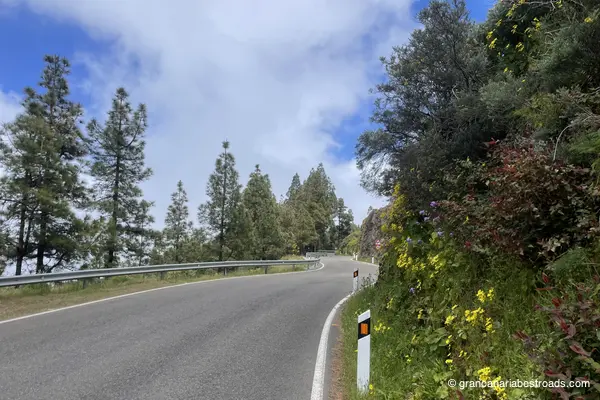
Gran Canaria Journey in 2 Days (road version)
A two-day exploration of Gran Canaria combining the main coastal and mountain attractions, with a focus on riding pleasure.
Included itineraries:
- Grand sea itinerary
- The heart of Gran Canaria (road version)
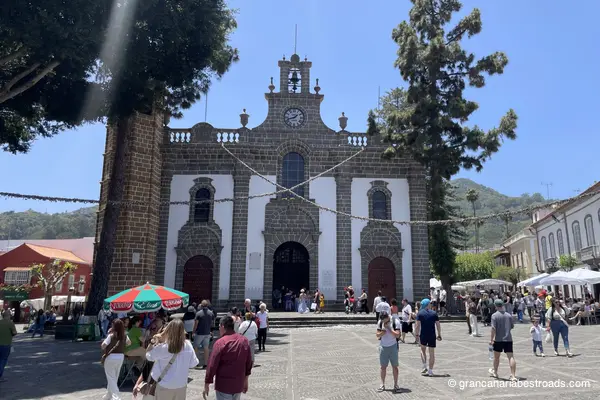
Gran Canaria Journey in 2 Days (tourist version)
A two-day exploration of Gran Canaria combining the main coastal and mountain attractions with the most characteristic Canarian towns.
Included itineraries:
- Grand sea itinerary
- The heart of Gran Canaria (tourist version)